
Web app · Philippines · 14 days free
Tinda
A daily list for home sellers in the Philippines. Post today’s list, share one link in your group chat, and buyers order from it without an app or an account. They pay to your own GCash or Maya QR, and you get one tally of what to prepare.
Free for 14 days, then ₱59 a month or ₱590 a year. Nothing renews by itself.
Screens
The home page, and sample screens from the user guide. The sample screens use made-up shops and orders.
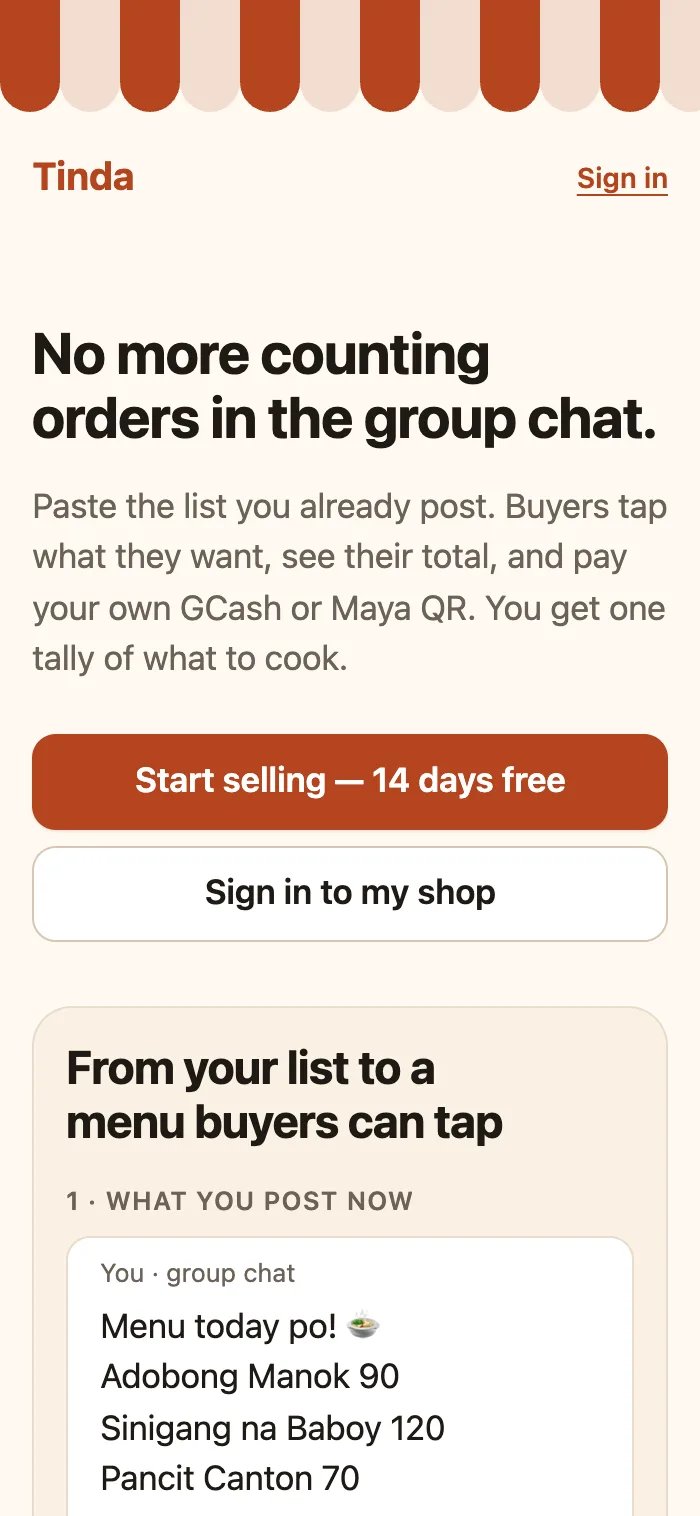
The Tinda home page. 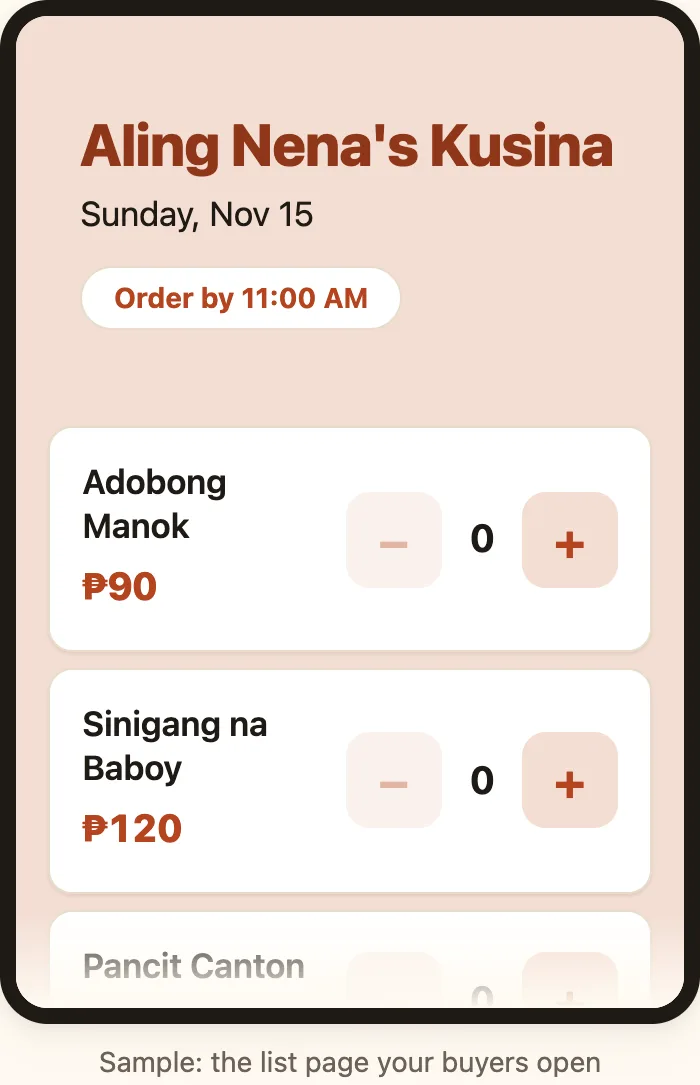
Sample screen: the list page your buyers open. 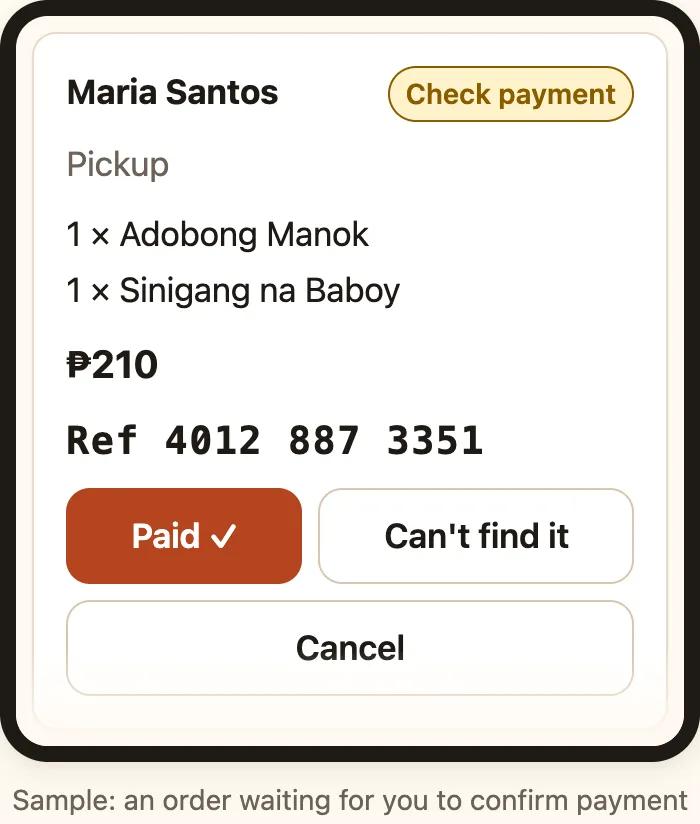
Sample screen: an order waiting for the seller to confirm payment. 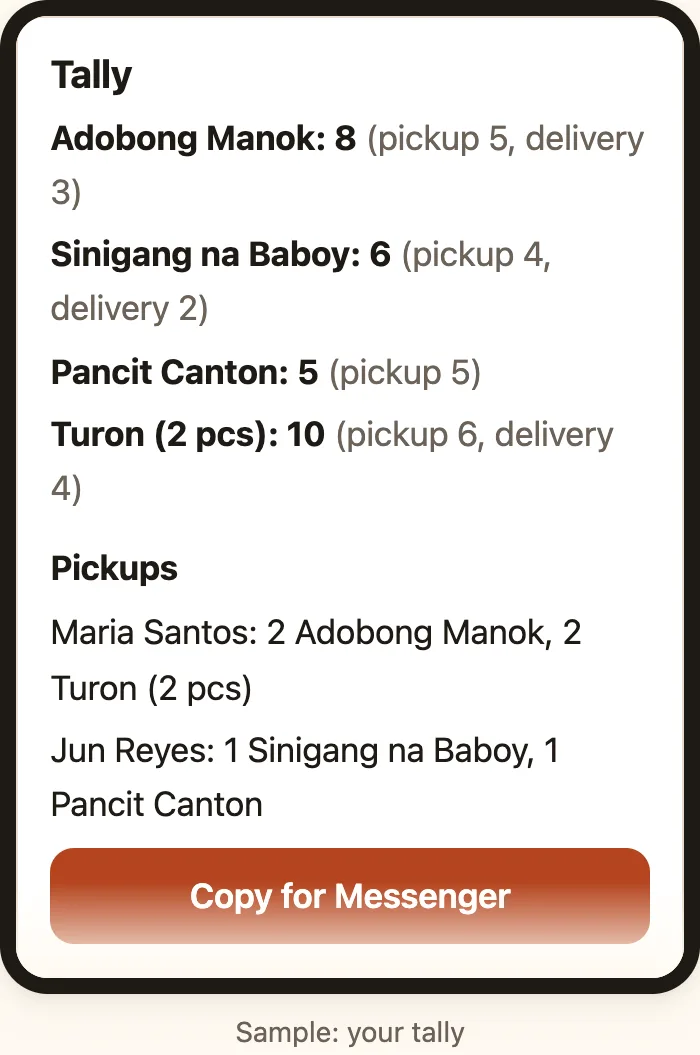
Sample screen: the tally of what to prepare. 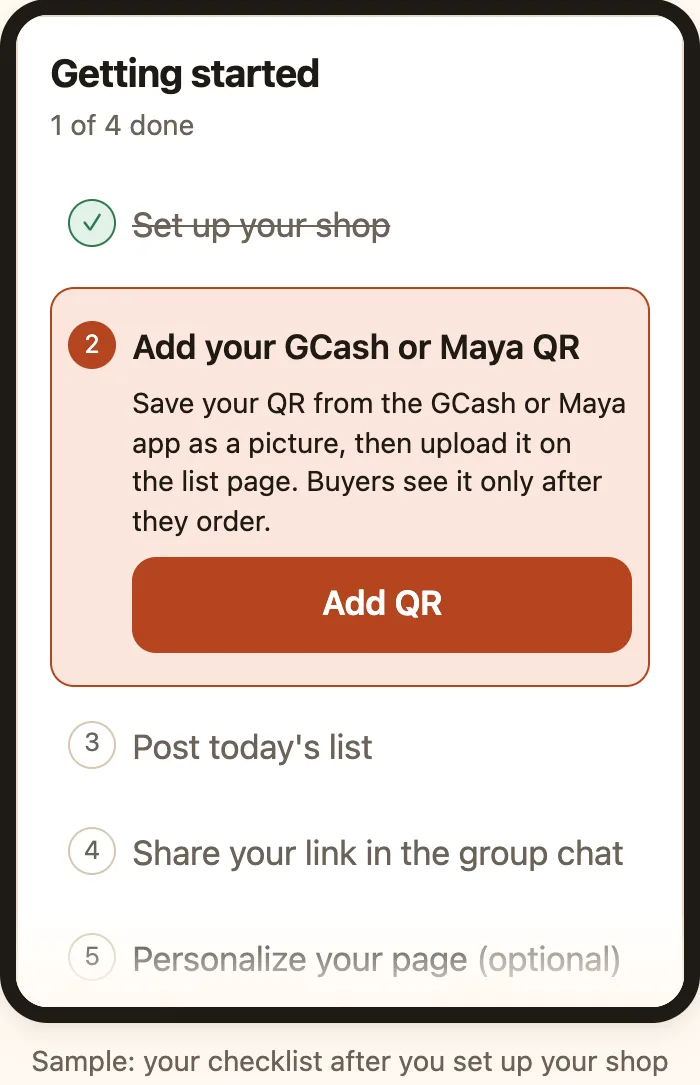
Sample screen: the seller’s checklist after setting up a shop. 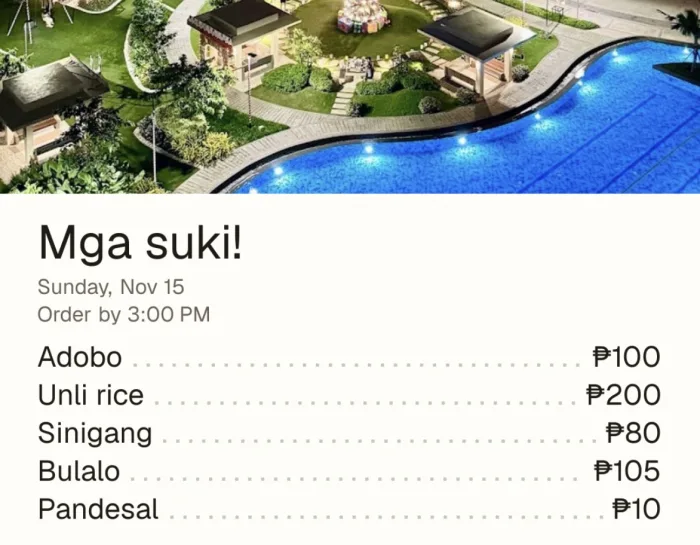
Sample screen: a menu picture personalized with a shop photo and heading. 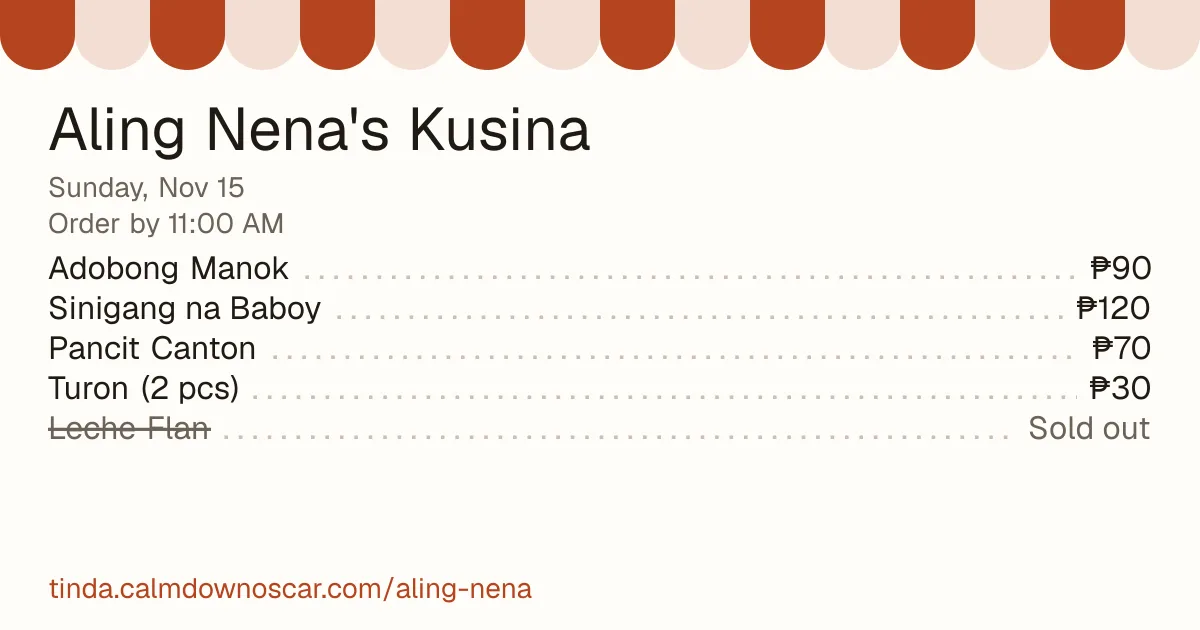
Sample screen: the preview picture of today’s list that shows in a group chat.
Read more
How to use it, and what it does with your data.
How it’s built
The tools behind Tinda, what each one does, and why it was chosen.
- Next.js 16, React 19, TypeScript
Server-rendered pages, in one codebase for the buyer, seller and owner pages.
Why: buyers on cheap phones and slow data get HTML first. - Installable PWA with a service worker
Sellers add Tinda to the home screen. Seller pages are never cached by the service worker, because they hold buyers’ names and phone numbers.
Why: no app store download, and updates reach every seller at once. - Supabase Postgres, Singapore region
One relational database for shops, lists, stock and orders.
Why: it is close to Philippine users, and stock, orders and cutoffs are enforced in the database itself. - Supabase Auth
Email sign-in codes (6 digits, sent through Resend) and Google sign-in.
Why: buyers never need an account. - Supabase Storage
A private bucket for sellers’ payment QR images.
- pg_cron
Scheduled jobs inside the database. They release unpaid reservations every 5 minutes, delete old orders nightly at 03:30 Manila time, and carry a seller’s list forward just after midnight.
- Zod
Every form and API input is validated on the server before it reaches the database.
- next/og and sharp
next/og generates the link-preview picture of today’s list that shows in Facebook groups and Viber chats. sharp resizes uploaded photos.
- Vercel
Hosting, a global CDN for public pages, and a preview deploy for each branch. Server functions run in Singapore, next to the database.
- Vitest, PGlite and jsdom
900+ test cases, including a database suite that runs the real migrations and policies in-process on PGlite (real Postgres compiled to WebAssembly).
GitHub Actions runs lint, typecheck, tests, a production build and a bundle scan. The scan fails if the server-only database key ever appears in browser code. - Payments
The buyer pays the seller’s own GCash or Maya QR. Tinda never holds buyers’ money.
Ready to scale
What is already in place for more sellers and more buyers, and what comes next.
- Access control
Row Level Security is on every table. The anonymous and signed-in roles start with all access revoked, then get column-level grants only.
Sellers can only read and change their own shop’s rows. Authorization is per record on the server, never by hidden UI. - Stock and orders
Stock is reserved inside database functions with row locks, so two buyers can’t both get the last item.
At most 5 of one item per order. Unpaid holds expire automatically. - Rate limiting
Limits live in Postgres and are keyed on a scrambled network address (hashed with a daily-rotating salt), not the raw IP.
- Security headers
A strict Content-Security-Policy limited to the site and its database, HSTS, no framing, and no camera, microphone or location access.
- Speed
Public pages are server-rendered and CDN-cached. The seller’s order board refreshes every 20 seconds and pauses when the tab is hidden. There is no client-side analytics and there are no third-party scripts to slow pages down.
The shared link’s preview image is cached, so it can be up to two hours behind on sold-out items. The list page itself is always current. - Scaling out
Stateless serverless functions scale out on demand. Concurrency correctness lives in Postgres, not in app memory, so more traffic means more function instances, not new bugs.
- Privacy by design
Tinda collects only a name, a unit or address, an optional phone number, an optional short note to the seller and a payment reference. Orders are deleted automatically after 60 days, in line with the Philippine Data Privacy Act.
- Next at scale
Move hosting to a paid plan before charging, and add automatic checkout once a payment provider is set up.